
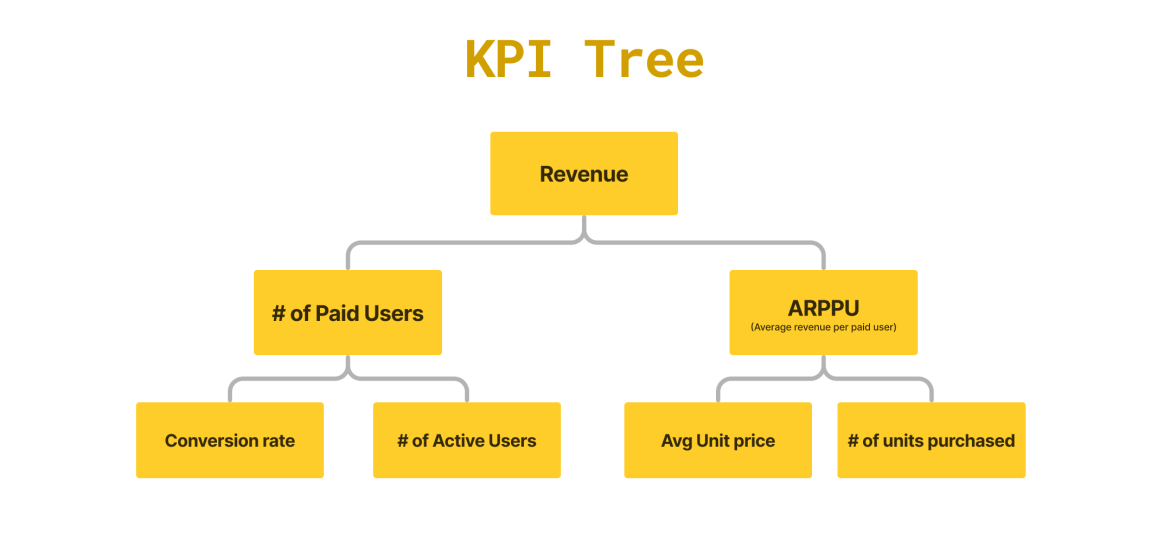
Imagine managing a company as if you were tending to a vast orchard. Each tree represents a department, each branch a team, and every leaf a specific task. The orchard’s health depends on how well each part contributes to the overall harvest. In business, Key Performance Indicator (KPI) Trees function just like this—offering a structured way to see how every individual effort aligns with organisational goals.
A KPI Tree decomposes broad strategic objectives into measurable, actionable elements, allowing teams to connect their daily work to long-term success.
From Vision to Measurable Action
Business strategies often begin as broad visions: increase revenue, improve customer satisfaction, or enhance operational efficiency. Yet, without clear metrics, these visions remain abstract ideals. KPI Trees transform them into tangible objectives by breaking down top-level goals into smaller, measurable indicators.
For instance, a goal like “increase profit margins” could branch into “reduce operational costs,” which further divides into “optimise supply chain,” “reduce waste,” and “improve vendor contracts.” Each of these can then be measured through specific KPIs such as delivery time, defect rate, or cost per unit.
This approach ensures that every level of the organisation—from executive planning to ground operations—has clarity about what contributes to success. Learners exploring these principles in a business analysis course in Pune often use case studies to map these trees, seeing how structured frameworks translate strategy into data-driven action.
Why KPI Trees Create Alignment
Misalignment between teams is one of the biggest reasons businesses struggle to execute strategies effectively. A marketing department might chase engagement, while sales focus solely on conversions, leading to disconnected outcomes. KPI Trees eliminate this friction by creating a common reference point.
When top-level objectives are decomposed, each department’s metrics link directly to company-wide goals. This transparency helps managers prioritise resources and identify bottlenecks early.
Professionals who master KPI mapping through structured learning—like those enrolled in a business analysis course in Pune—learn to identify dependencies between teams and ensure that everyone measures success by the same yardstick.
Building a KPI Tree Step by Step
Creating a KPI Tree isn’t about listing random numbers—it’s about logical structuring. The process generally follows these steps:
- Define the core goal. Start with a primary objective, such as “boost customer lifetime value.”
- Identify key drivers. Determine the major factors influencing that goal, like retention rate or purchase frequency.
- Break drivers into sub-metrics. Translate them into measurable actions, such as improving onboarding or reducing churn.
- Assign ownership. Link every KPI to a responsible team or individual.
- Validate and iterate. Regularly assess whether each metric still aligns with the overarching goal.
Each step ensures that no measurement exists in isolation. It’s this interconnection that makes KPI Trees a powerful diagnostic and management tool.
The Analyst’s Perspective: Turning Trees into Insights
For business analysts, KPI Trees are more than just visual aids—they’re diagnostic frameworks. By tracing performance issues up or down the tree, analysts can identify where processes break down or succeed.
A drop in quarterly revenue might not be a direct sales problem but a retention issue hidden in the customer satisfaction branch. This holistic perspective transforms raw numbers into actionable insights.
Analysts trained through structured programmes develop this analytical maturity, learning how to connect individual metrics to business health. This skill is what separates data reporting from strategic storytelling.
Adapting KPI Trees for Modern Data Environments
Today’s organisations operate in data-rich ecosystems where KPIs can be tracked in real time. Integrating KPI Trees into dashboards, business intelligence tools, or automation systems ensures that leaders can monitor progress dynamically.
Modern analysts now combine traditional KPI hierarchies with data visualisation techniques, enabling faster decision-making and predictive insights. Instead of waiting for end-of-quarter reports, businesses can adjust strategies instantly when a metric begins to underperform.
Conclusion
KPI Trees offer a roadmap for transforming strategy into measurable progress. By connecting high-level objectives to granular metrics, they ensure every part of an organisation moves in sync toward shared goals.
For aspiring professionals, understanding how to construct and interpret these trees is essential to driving meaningful business outcomes. Structured learning and practical experience can make the difference between analysing data and truly steering organisational success.
Just like a gardener nurturing every branch to ensure a fruitful harvest, analysts who master KPI Trees cultivate clarity, alignment, and measurable impact across their organisations.
